
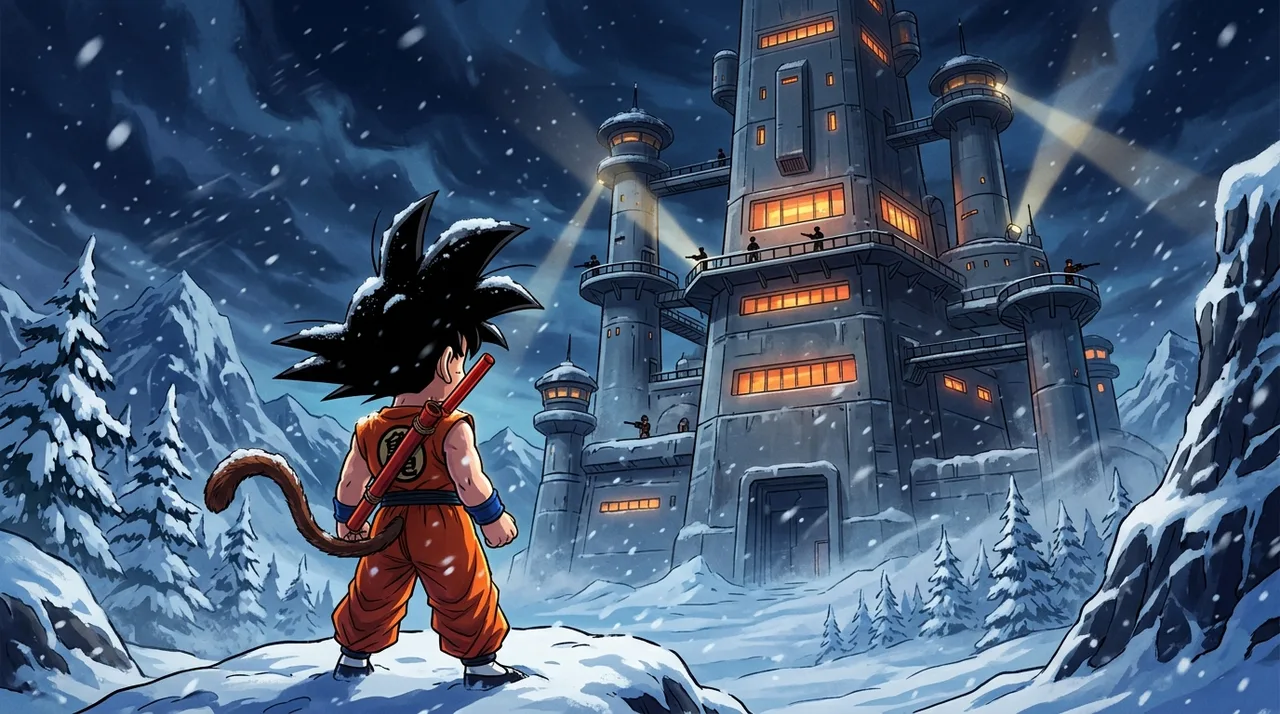
The Red Ribbon Army Saga is the third and longest arc of Dragon Ball: forty episodes that aired on Fuji TV between September 10, 1986 and July 1, 1987, adapting chapters 54-97 of Akira Toriyama's manga. After the tournament, Goku sets off alone to find his grandfather's four-star ball and runs into a private army that wants the Dragon Balls to conquer the world. He takes it apart, base by base, almost single-handedly.
What the saga is about
Once the 21st World Martial Arts Tournament Saga is over, the gang splits up. Goku heads out with Bulma's radar and soon learns he is not the only one hunting Dragon Balls: so is the Red Ribbon Army, a military organization with tanks, fighter jets, bases all over the world and a leader, Commander Red.
Silver and Muscle Tower
The anime opens with four original episodes in which Goku runs into Pilaf, Chi-Chi and the Ox-King and witnesses the army's first show of force. Then comes the clash with Colonel Silver, beaten in a few blows, and a flight north that ends in the ice. Rescued by little Suno, Goku learns that General White is holding the mayor of Jingle Village prisoner in Muscle Tower, and climbs it one floor at a time: the robot Sergeant Metallic, Ninja Murasaki and his four identical brothers, the rubbery monster Buyon. Along the way he finds an unlikely ally, Android 8, a gentle giant Goku nicknames Hatchan, who ends up knocking White out and bringing the tower down.
West City and General Blue
With his radar broken, Goku visits Bulma, who turns out to be the daughter of Capsule Corporation's president. After a detour to an amusement park with the thief Hasky, an anime-only character, the two set off together with Krillin toward a Dragon Ball lying on the seabed. Waiting for them is General Blue, the most dangerous officer yet: vain, obsessed with cleanliness and gifted with psychic powers. The fight moves through a trap-filled cave and an old pirate hideout, then into a long chase that ends in Penguin Village, where Arale, the heroine of Dr. Slump, sends Blue flying with a single blow.
Mercenary Tao and Korin Tower
The final stretch is the most dramatic. In the Holy Land of Korin, Goku finally finds his grandfather's ball, guarded by Bora and his son Upa. But Commander Red has hired Mercenary Tao (Tao Pai Pai in Japanese), the world's most famous assassin, who kills Bora and floors Goku with his Dodonpa. Goku survives only because of the ball he carries against his chest. To get stronger he climbs Korin Tower and asks for the sacred water kept by the cat hermit at the top: the water turns out to be ordinary, but the effort of winning it has made him far stronger. Tao is defeated, and Goku flies straight for Red Ribbon headquarters.
The army's fall
The assault on the base is a show of strength: missiles batted away, soldiers fleeing, officers running off with the cash. Commander Red turns out to be a small man with a petty wish, to be taller, and is killed by his own right-hand man, Staff Officer Black, who takes on Goku in a robotic battle suit and loses. In the end Goku has six Dragon Balls, but the radar cannot find the seventh.
Characters introduced
- Commander Red and Staff Officer Black: the Red Ribbon leader and the right-hand man who will betray him.
- Colonel Silver, General White, General Blue: officers named after colors, each with his own style.
- Android 8 (Hatchan): the gentle giant of Muscle Tower, called Eighter in the Funimation dub.
- Suno: the Jingle Village girl who saves Goku from the cold.
- Arale: the robot girl from Dr. Slump, in a fondly remembered crossover.
- Bora and Upa: the guardians of the Holy Land of Korin.
- Mercenary Tao: the professional assassin, who will return later in the series.
- Korin: the cat-like master living at the top of the tower.
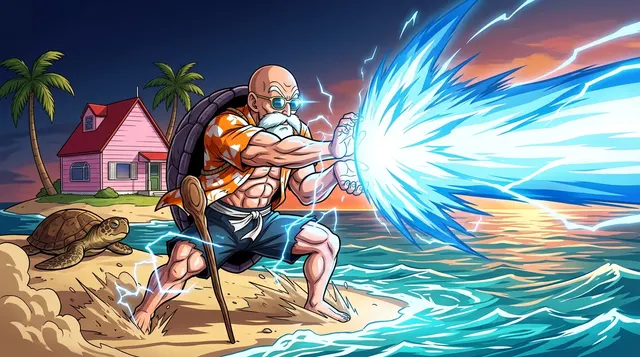
Bulma, Krillin, Master Roshi, Yamcha, Launch, Puar, Oolong and, for two episodes, Chi-Chi are back too.
Main characters in this saga
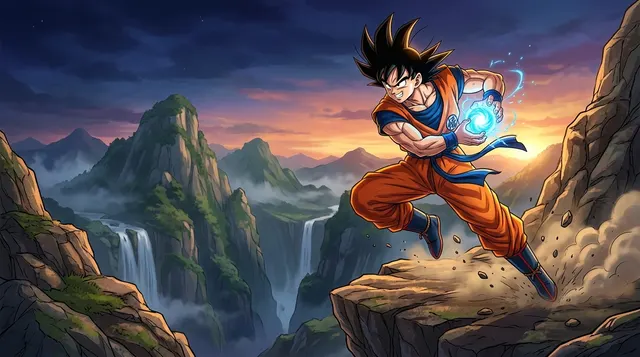
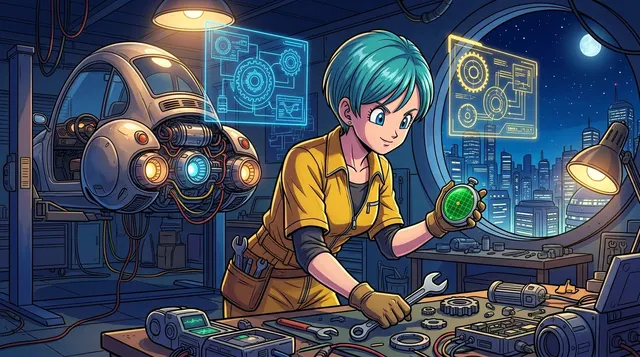
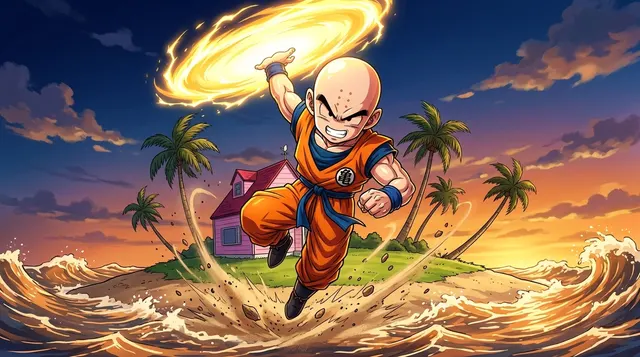
Episode list
Titles are literal translations of the Japanese ones. The Funimation dub used its own, such as The Roaming Lake for episode 29 or Deep Blue Sea for episode 48.
Anime vs. manga
The American DVD releases, followed by this site's series page, split these forty episodes into three blocks: Red Ribbon Army (29-45), General Blue (46-57) and Commander Red (58-68). Spanish Wikipedia treats them as a single saga, and that is the choice of this guide, because there is one thread running through them all: Goku's war against the army.
Compared with the previous saga, the anime strays further from the manga. Episodes 30-33 and 45 are entirely original, and many others stretch scenes with new characters and situations: Pilaf and Chi-Chi at the start, Dr. Flappe removing Hatchan's bomb, the thief Hasky, the flashbacks and homely scenes in Jingle Village. The anime also changes a few key details: in the manga Muscle Tower never collapses, and Colonel Silver's death sentence is spelled out.
Our take
This is the saga where Dragon Ball becomes a full-blown action adventure. The tournament taught Goku how to fight; the Red Ribbon Army gives him an enemy, and with it a moral reason to do so. Villages held hostage, forests set on fire, men executed for a single mistake: the army is the series' first truly frightening villain, even if Toriyama never stops poking fun at it, from the robot with a dead battery to the boss who just wants a few extra inches.
The stage-by-stage structure is both its strength and its limit. Each base is a little world with its own tone, from the northern fairy tale of Muscle Tower to Blue's pirate adventure and the mystical western of Korin Tower. But forty episodes are a lot, and the anime's original inserts, especially early on, pad things out.
The legacy, however, is huge. The Red Ribbon Army will echo through the series for decades, from Dr. Gero's androids in Dragon Ball Z to Dragon Ball Super. And the training on Korin Tower introduces an idea that will become central: real strength does not come from magic water, but from the effort spent looking for it.
Up next: the Fortuneteller Baba Saga, episodes 69-83 →
 Series guideDragon Ball (1986): complete guide to the original seriesPlot, characters, production and theme songs: the full picture of Dragon Ball, worth reading before or after the episodes.Read the guide →